
How to Organize Your Closet by Color: A Simple Guide
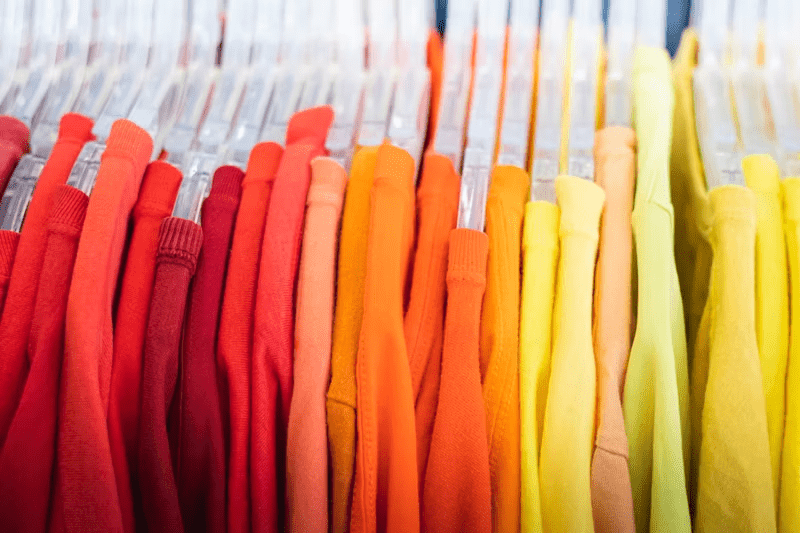
Organizing a closet can be a daunting task, but it is one that can have many benefits. If you’d rather have someone handle it for you, our professional closet organizing service can help. Not only does it help declutter your space, but it can also make it easier to find what you’re looking for. One way to organize your closet is by color. This method can be both visually appealing and practical.
Closet organization by color involves grouping similar colors together. For example, all your red clothing items would be hung together, followed by orange, yellow, green, blue, indigo, and violet. This method can make it easier to find specific items, especially if you have a lot of colorful clothing. It can also give your closet a cohesive look.
In addition to the visual benefits, organizing your closet by color can also help with decluttering. By grouping similar items together, you can easily see how many items you have in each color category. This can help you identify items that you no longer need or want, making it easier to donate or sell them. Overall, organizing your closet by color can be a simple and effective way to improve the functionality and appearance of your space.
Understanding Color Organization
When it comes to organizing a closet by color, there are a few methods to choose from. Understanding the basics of color organization can help you decide which method works best for you.
The ROYGBIV Method
One popular method of color organization is the ROYGBIV method. ROYGBIV stands for red, orange, yellow, green, blue, indigo, and violet. This method involves hanging clothes in the closet in the order of colors you would see in a rainbow. This method is easy to remember and visually pleasing.
Color-Coding Basics
Another method of color organization is color-coding. This method involves grouping clothes together based on their color. The clothes can be sorted from light to dark or by using a specific color order. The color order can be customized to suit personal preferences.
Dominant Color Strategy
The dominant color strategy involves grouping clothes together based on their dominant color. For example, if a person has a lot of blue clothes, they can group all their blue clothes together. This method allows for easy identification of the dominant color in the wardrobe.
When organizing a closet by color, it is important to keep in mind personal preferences and the purpose of the closet. The chosen method should be visually appealing and functional. A well-organized closet can save time and make it easier to find the desired outfit.
Preparation for Closet Organization
Before you start organizing your closet by color, it is essential to prepare your closet for the process. This section will provide you with the necessary steps to declutter and sort your closet, and assess your wardrobe to make the organization process more manageable.
Declutter Your Closet
The first step is to declutter your closet. Remove everything from your closet and examine each item. It’s time to get rid of clothes that no longer fit, are out of style, or haven’t been worn in a while. Separate items into three piles: keep, donate, and discard. The keep pile should only include clothes that fit well, are in good condition, and are still in style. Donate clothes that are still in good condition but no longer needed. Discard clothes that are worn out, stained, or damaged beyond repair.
Sorting Clothes by Type
Once you have decluttered your closet, it’s time to sort your clothes by type. Separate your clothes into categories such as dresses, shirts, pants, and skirts. This step will make it easier to find what you need when you’re getting dressed. You may also want to separate your clothes by season, so you can easily switch out your wardrobe when the weather changes.
Assessing Your Wardrobe
Finally, it’s time to assess your wardrobe. Take a look at the clothes you have left and determine what you need. Do you have too many dresses and not enough pants? Are you missing a specific color that you wear often? Make a list of the items you need to fill the gaps in your wardrobe. This step will help you avoid buying clothes you don’t need and ensure that your wardrobe is functional and practical.
By following these steps, you’ll be ready to start organizing your closet by color. For folded items, see our guide on how to organize clothes in drawers. Remember, preparation is key to a successful closet clean-out, so take your time and be thorough.
Implementing Your Color Organization System
Now that you have sorted your clothes by hue and selected a color-coding method, it’s time to implement your color organization system. Here are some tips to help you get started:
Arranging Clothes by Hue
Start by arranging your clothes by hue and hanging them in your closet in the order of the color-coding method you have chosen. For example, if you have chosen to organize your clothes in ROYGBIV order, you should hang your red clothes first, followed by orange, yellow, green, blue, indigo, and violet.
Using Dividers and Hangers
Use dividers and hangers to keep your clothes organized and separated by color. You can use dividers to separate different color groups or to separate clothes by type, such as pants, skirts, and dresses. You can also use hangers with clips to group clothes by color or type and keep them together.
Organizing Shoes and Accessories
Don’t forget to organize your shoes and accessories by color as well. You can use storage boxes or shelves to keep your shoes organized and separated by color. For accessories, you can use drawer dividers or small storage containers to keep them organized by color.
By following these tips, you can create a color organization system that works for you and helps you keep your closet organized and clutter-free. Remember to regularly update and maintain your color organization system to ensure that it continues to work for you.
Maintaining a Color-Coordinated Closet
Once you have color-coordinated your closet, it is essential to maintain it. Here are some tips to keep your closet organized by color:
Seasonal Updates
Twice a year, it is essential to update your closet with seasonal clothes. When transitioning from one season to another, it is the perfect time to declutter and reorganize your closet. Start by taking out all the clothes that you will not wear in the upcoming season, and store them in storage bins or baskets. Then, take out the clothes that you will wear in the upcoming season and organize them by color.
Daily Closet Maintenance
Maintaining a color-coordinated closet requires daily attention. When you take out an item to wear, make sure to put it back in its designated color section. This practice will help you keep your closet organized and prevent clutter from building up.
The Role of Storage Solutions
Storage solutions such as storage bins and baskets are essential in maintaining a color-coordinated closet. Use them to store off-season clothes, accessories, and shoes. Make sure to label the storage solutions with the color category they belong to so that you can easily find them when you need them.
In conclusion, maintaining a color-coordinated closet requires regular attention and organization. By following these tips, you can keep your closet organized, prevent clutter from building up, and find what you need quickly and easily.
Advanced Closet Organization Techniques
When it comes to organizing a closet by color, there are a few advanced techniques that can take your organization to the next level. These techniques can help you create a visually pleasing and attractive closet that is both functional and beautiful.
Organizing Prints and Patterns
One of the challenges of organizing a closet by color is dealing with prints and patterns. It can be difficult to know where to place these items in your color scheme. A good rule of thumb is to group prints and patterns by color family. For example, if you have a floral shirt with pink and purple flowers, you could place it in the pink or purple section of your closet.
Creating Visually Pleasing Gradients
Another advanced technique is to create gradients within your color scheme. This involves organizing your clothes from light to dark within each color family. For example, you could start with light pink shirts and gradually move towards darker shades of pink. This creates a visually pleasing gradient that is both attractive and functional.
Experimenting with Color Families
Finally, don’t be afraid to experiment with different color families. While organizing by color is a great way to keep your closet organized, it can also be fun to mix and match different colors and patterns. Try pairing complementary colors together or adding a pop of color to an otherwise neutral outfit.
By using these advanced closet organization techniques, you can create a closet that is not only organized but also visually pleasing and attractive. For more ideas, see our post on how to organize a walk-in closet.
A quick color theory primer for your closet
Most people organize by color using gut instinct, and that’s fine — but a little bit of color theory makes your closet dramatically more satisfying to look at. You don’t need to be a designer to apply these ideas; you just need to know three terms.
Hue, value, and saturation
Every color has three properties:
- Hue — the base color (red, blue, green, etc.)
- Value — how light or dark the color is (pale pink vs. burgundy are both “red” but have very different values)
- Saturation — how intense or muted the color is (a bright neon green vs. a dusty sage green)
When you organize by color, you’re primarily sorting by hue. But within each hue, you’ll get a much more visually pleasing result if you also sort by value — lightest to darkest, or darkest to lightest — within each color family.
Warm colors vs. cool colors
Colors are traditionally split into two temperature groups:
- Warm colors: red, orange, yellow, and the color families that lean toward them (coral, rust, mustard, terracotta)
- Cool colors: green, blue, indigo, violet, and anything that leans toward them (teal, navy, lavender, mint)
A pleasing closet usually transitions from warm to cool (or cool to warm) in a smooth gradient, rather than bouncing back and forth. This is why the classic ROYGBIV order works so well — it’s already in a warm-to-cool progression.
How to organize a closet by ROYGBIV (step by step)
ROYGBIV is the gold standard because it’s a complete, easy-to-remember order that mirrors a rainbow. Here’s exactly how to implement it.
- Empty the rod completely. Don’t skip this. Organizing “around” existing clothes never works — you’ll miss items and won’t see your true wardrobe.
- Sort into 7 piles on your bed: red, orange, yellow, green, blue, indigo (dark blue/navy), and violet (purple).
- Create a neutrals pile. Black, white, gray, cream, beige, and brown are not part of ROYGBIV. Put them aside — we’ll decide where they go in the next step.
- Sort each color pile by value, lightest to darkest. For example, within the “red” pile: pink → coral → true red → crimson → burgundy.
- Rehang from left to right in ROYGBIV order. Start with your lightest red on the left and end with your darkest violet on the right.
- Decide on neutrals placement. The two most common options are: (a) neutrals on the far left before colors (going from white → gray → black → colors), or (b) neutrals on the far right after colors. Either works. Pick one and stick with it.
The whole process takes 90 minutes to 3 hours for a standard closet. A walk-in can take 4–6 hours.
How to handle tricky items
Color-coding is elegant until you hit the items that don’t obey the rules. Here’s how to handle the most common edge cases.
Multi-color items and prints
A floral blouse with pink, green, and cream has no single “correct” location. Use the 50% rule: whichever color covers the largest area of the item is its home. If two colors are roughly equal (a 50/50 stripe, for example), place it between the two color sections. Don’t overthink it — consistency matters more than perfection.
Black and white in a color closet
Black and white are the two most common “problem” items because almost every wardrobe has a lot of both. Don’t try to distribute them throughout the color sections — that breaks the visual flow. Instead, create a dedicated neutrals section that anchors one end of your closet. Black clothes, white clothes, gray, and beige all live together.
Denim
Denim is technically blue, but most denim looks muddy next to dresses and blouses in the blue section. We recommend giving denim its own section — either adjacent to your neutrals or on its own rod — rather than trying to file it in with your blue tops.
Seasonal items
Heavy winter coats and light summer dresses don’t need to share the same rod. Store off-season items separately (in garment bags, under the bed, or in a secondary closet) and only color-organize what you’re actively wearing this season. This alone makes a closet 40% less cluttered without getting rid of anything.
Uniforms and work clothes
If you wear a uniform or lots of very similar items (e.g., 12 white button-downs), don’t file them into your main color system. Give them their own section. A “work clothes” section on the right side of the closet keeps your color-coded system intact and makes weekday mornings faster.
Organizing drawers by color
Everything above applies to hanging items, but what about folded clothes? The same principles work for t-shirts, sweaters, and workout gear in drawers — with one adjustment.
Fold items file-style (vertically, so you can see each piece from above when you look down into the drawer, rather than stacking them flat on top of each other). Then arrange them by color left to right or front to back, matching the same ROYGBIV or light-to-dark order you’re using in the closet.
For more on drawer folding techniques, read our guide on how to organize clothes in drawers.
Common mistakes people make with color organizing
After years of doing this for clients, we see the same mistakes over and over. Avoid them and your closet will hold up for months instead of drifting back to chaos in a week.
- Skipping the declutter step. Organizing by color amplifies whatever’s already there — including the 40% of clothes you don’t actually wear. Declutter first, then color-code. This is the single most important step.
- Mixing hanger types. Nothing ruins a color-coded closet faster than a mix of plastic, wire, and wood hangers. Use one style (we recommend slim velvet or wood) and your colors will pop.
- Fighting multi-color items. Don’t agonize over where a striped shirt goes. Apply the 50% rule and move on.
- Forgetting daily maintenance. A color-coded closet requires 30 seconds of daily attention: put items back in the right color zone. Skip a week and the system breaks down.
- Overbuying containers before decluttering. See our full pricing guide, how much does a professional organizer cost, for more on why this is such a common mistake.
Frequently asked questions about organizing a closet by color
Is organizing by color actually practical, or just pretty?
Both, but primarily practical. Color coding makes it faster to find the specific item you’re thinking of (“that navy blazer”), reveals when you own too many of one color, and makes getting dressed easier because you can build outfits visually. The aesthetic benefit is real, but the functional benefit is bigger.
Should I organize by color or by type first?
Type first, then color within type. Keep all your shirts together, all your pants together, all your dresses together — and then color-code within each category. A closet sorted by color but mixed across categories is beautiful but hard to use.
What color order should I use?
ROYGBIV is the most common, but light-to-dark gradient works too. Choose whichever feels more natural. Consistency matters more than the specific order.
How do I keep a color-coded closet from falling apart?
Rehang items in their correct section every time. It takes 10 seconds per item. Also, do a 5-minute reset once a week — put any stray items back where they belong. Color-coded closets are easy to maintain if you don’t let them slip for more than a week.
Does organizing by color work for men’s closets?
Yes, often better. Men’s wardrobes typically have fewer colors and more neutrals, which makes color organizing even easier. The same ROYGBIV or light-to-dark approach works — just expect a bigger neutrals section (black, white, gray, navy, khaki).
Want professional help with your closet?
Organizing a closet by color sounds simple, but if you’ve been staring at a mountain of clothes for three weekends in a row, you already know it isn’t. A professional organizer can reset a standard closet in 4–6 hours, including the decluttering phase most people get stuck on. See what a session costs and what’s included in our pricing guide, or book a free consultation through our professional organizing service.